
Dig it!
A day of impulses on untold histories and alternative archives
- encounter and exchange
- impulse
- workshop
- German
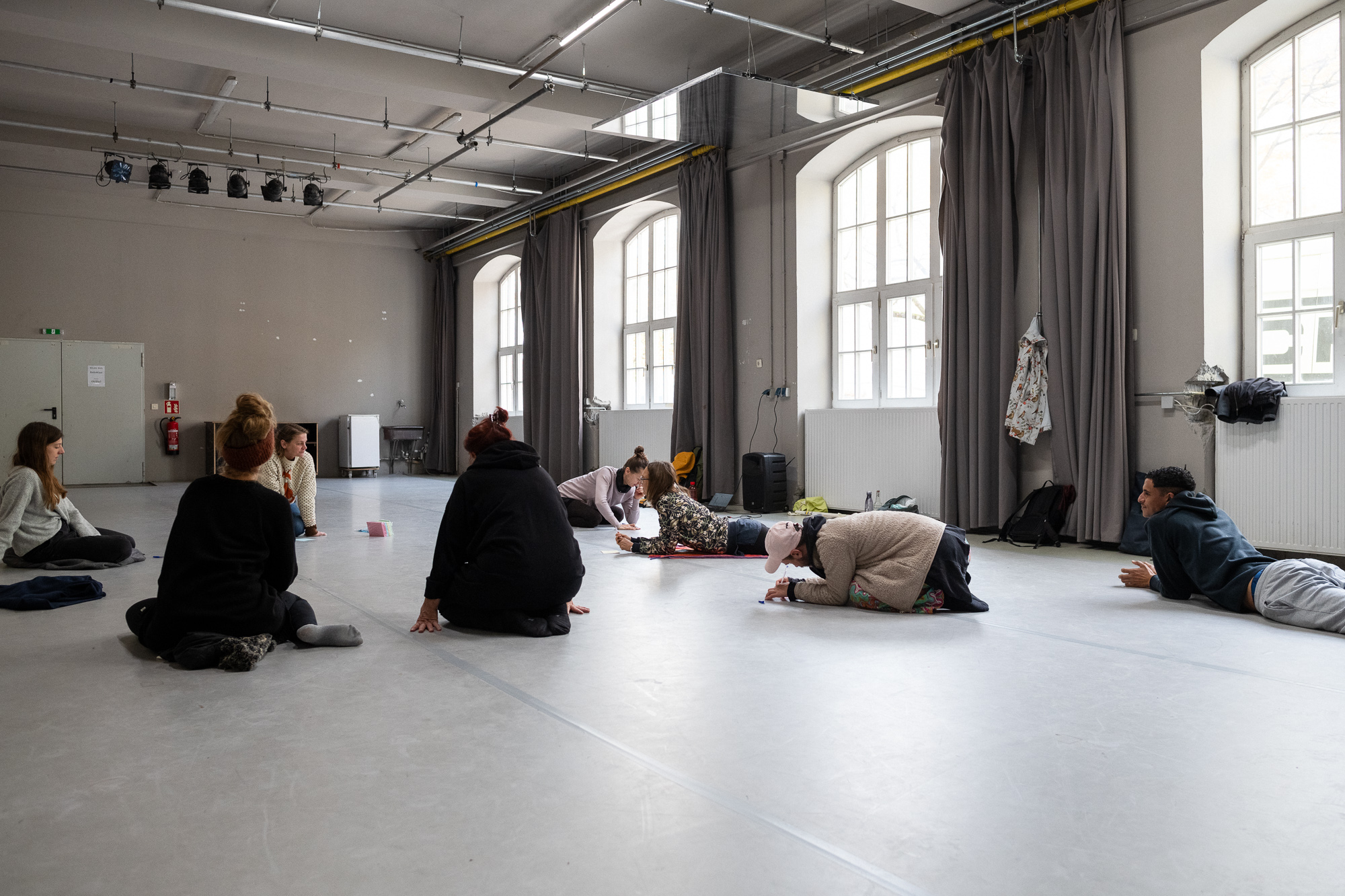
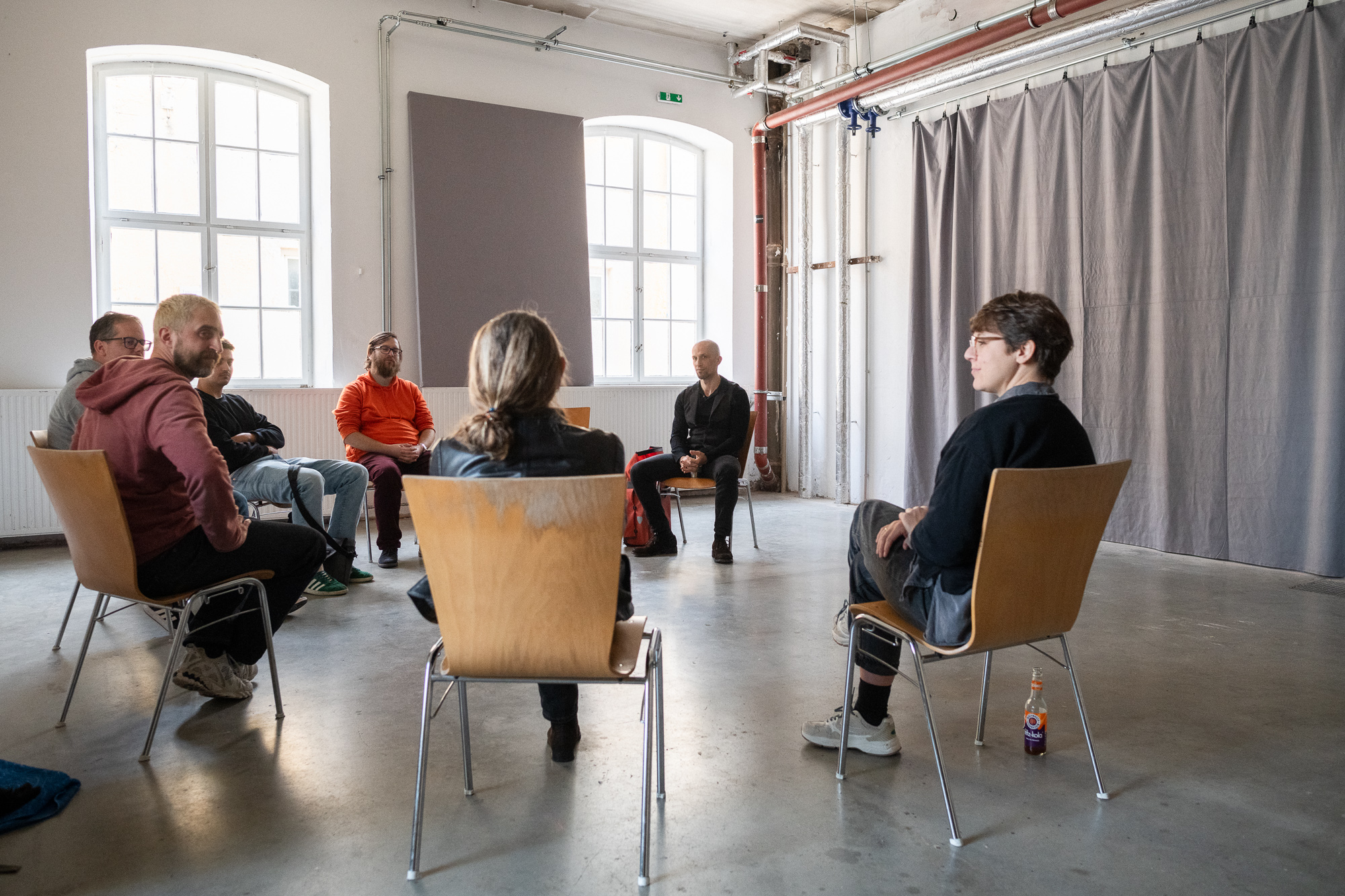
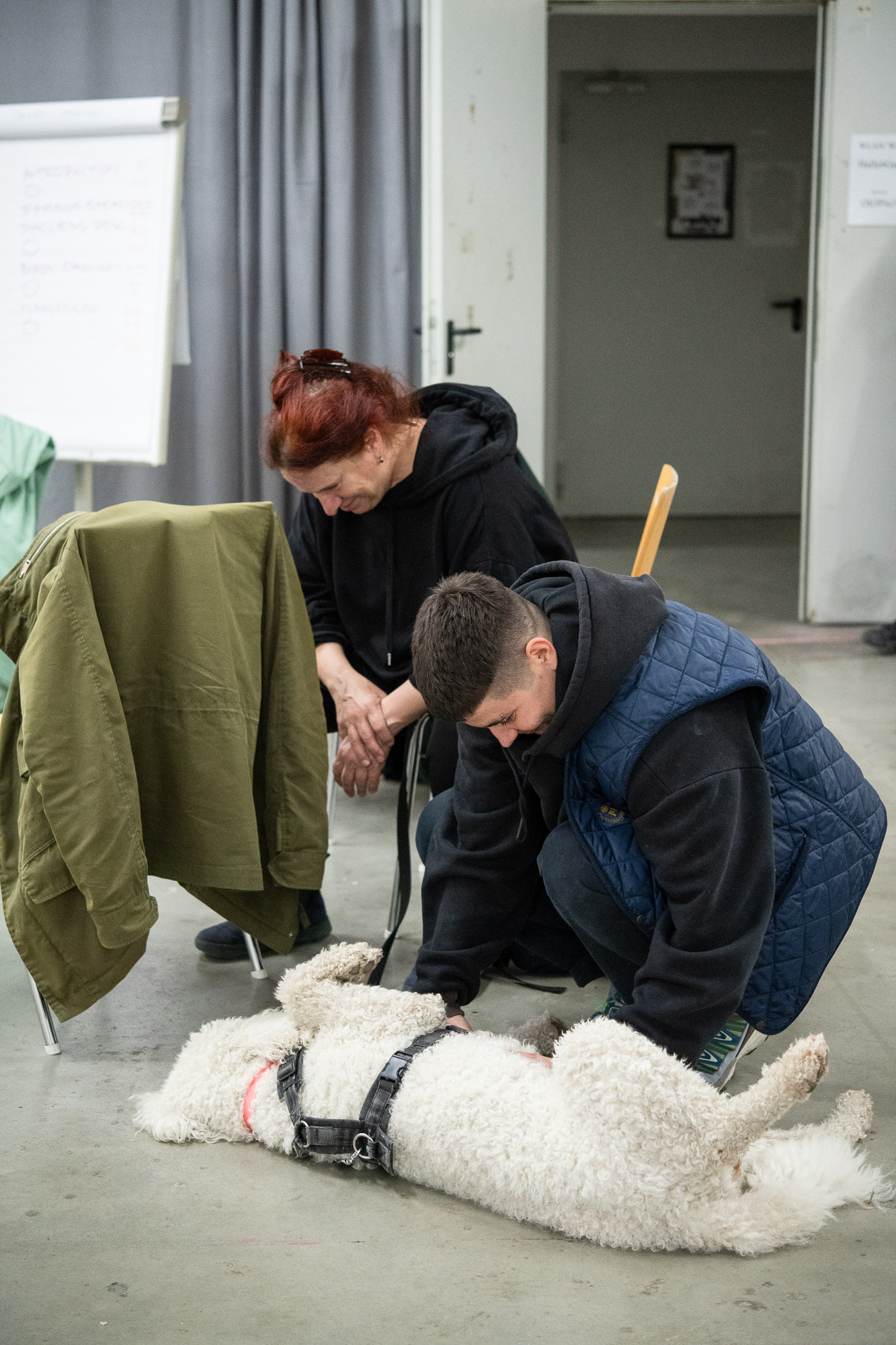
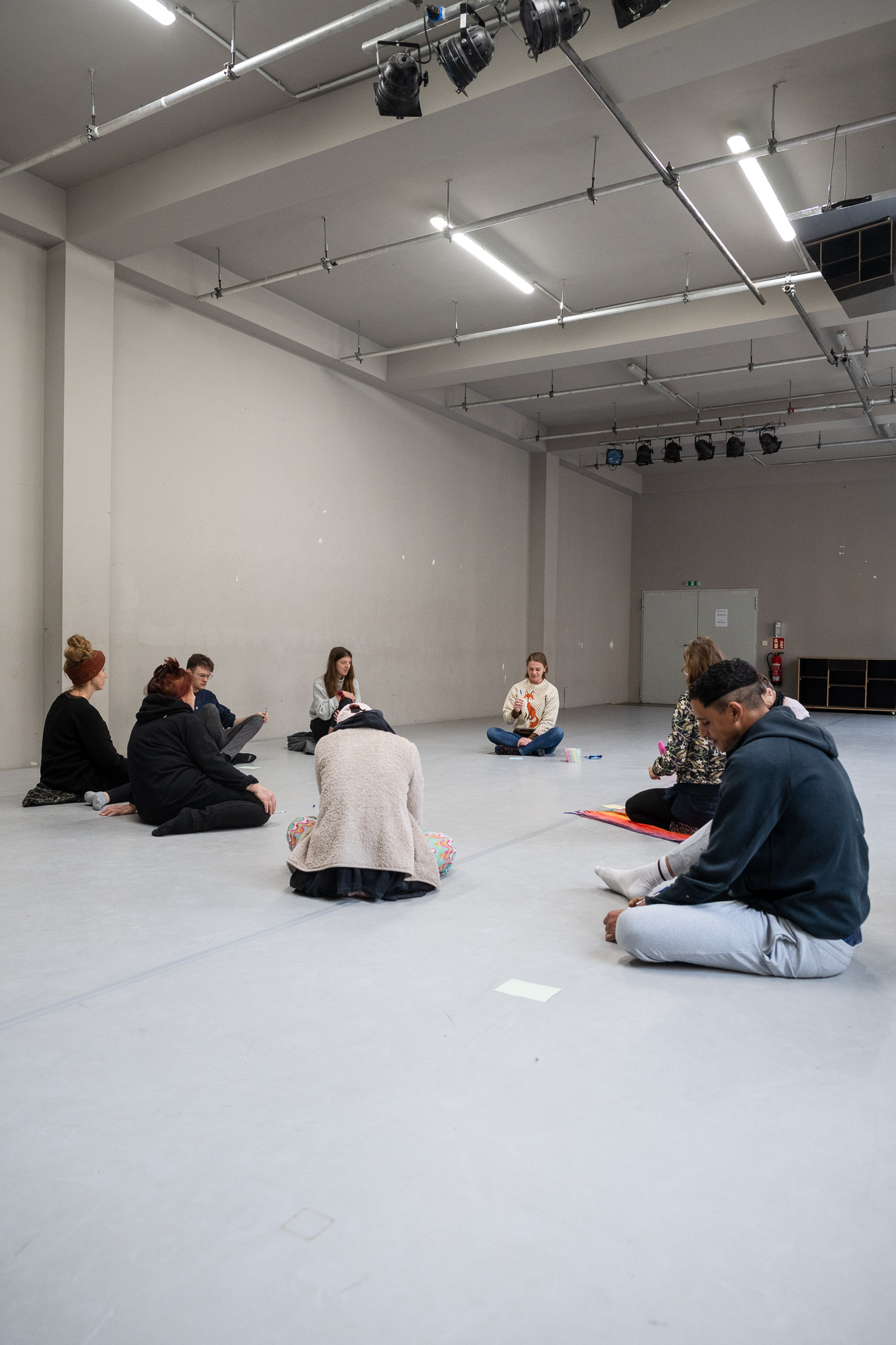
Many of the works presented at rodeo 2026 explore the uncovering of hidden stories, the making visible of suppressed experiences, and the amplification of marginalized perspectives. The Dig it! day of talks and workshops takes up these themes: over the course of a morning, we will explore questions of preservation, remembrance, and storytelling through workshops, talks, and short presentations.
Whose stories are told—in public, and in the theatre? And which ones are not? What gaps exist in our collective memory, and how can we tell stories differently, more effectively, and in more diverse ways—not only through words and images, but also through our bodies?
These questions also concern the independent performing arts themselves: How can the (sub)cultural heritage of this ephemeral art form be preserved? From the politics of the archive to art as counter-memory, the search for resistant forms of remembrance is also a challenge to the politics of representation and historical memory promoted by the New Right, which seeks to legitimize violence and render diversity invisible. Together with writers, dance and theatre practitioners, and scholars, we will enter this field of tension and bring history and stories to life through our voices and our bodies.
We’ll kick things off at 11 a.m. with a short, group session at the Festival Treff in the schwere reiter foyer. Afterward, we’ll split up, and everyone can attend one of the following two-hour workshops. The workshops will run concurrently from 11:30 a.m. to 1:30 p.m. To wrap things up, everyone will come back together for a meal.
The event is open to all interested visitors. Admission is free. No prior knowledge is required. Please register for the individual workshops via the ticket link.
Workshop Overview
1. Denijen Pauljević: What You Remember of Me (Writing Workshop)
What happens to a story when we tell it to another person? What remains, what changes, and what is added? Starting from personal memories, objects, photographs, words, or a song, we will write and tell stories, pass them on, and temporarily make other people’s stories our own. Two memories eventually become a third story created collectively—a story that belongs to no one person alone. In this way, we will create a small alternative archive made up of things experienced and imagined, of listening, remembering, translating, and continuing to write.
No previous experience is required. You are welcome to bring an object, photograph, sentence, word, song, or short story connected to a memory.
2. Dancing Memory: Cumbia Colombiana as a Body Archive (Dance Workshop)
In this workshop, Yolanda Morales and Nicolás Vignolo invite participants to discover Cumbia Colombiana from Monterrey as a living body archive. The dance style, which has acquired a particular cultural significance between Mexico and the United States, serves as a starting point for exploring migration, belonging, and collective identity. Especially within marginalized communities, dance can carry stories and knowledge across generations, making individual and collective memories tangible through the body.
The workshop builds on Yolanda Morales & Team’s current project, which draws on documentary material to explore the living and working conditions of the former coal-mining region of Lota in Chile. Together, we will explore how movement, images, and interviews can give rise to intergenerational practices of remembering.
No previous experience is required. Please wear comfortable clothing.
3. Nora Binder and Dr. des. Beatrice Wichmann: The Digital Archive of the Independent Performing Arts (Practical Introduction)
Earlier this year, the Digital Archive of the Independent Performing Arts went online—a platform for documents and materials relating to the history and present of the independent performing arts scene, initiated by Initiative für die Archive der Freien Darstellenden Künste e. V. Artists, collectors, and institutions can create their own entries and upload materials.
To make it easier to get started, the Deutsches Theatermuseum invites you to a workshop. Following an introductory talk by Dr. des. Beatrice Wichmann on archival work and collection strategies, participants will receive an introduction to the Digital Archive. There will then be plenty of time to create your own first entries, exchange ideas, and clarify questions on site.
Please bring your own laptop and material to catalogue. This could include, for example, programmes, video or text files, photographs, or images of props and stage sets.
4. Carla Lou Schäfer and Caroline Anne Kapp: The First Last Case (Pottery Workshop)
In this workshop, Carla Lou Schäfer and Caroline Anne Kapp will explore the Externsteine, a striking rock formation in the Teutoburg Forest located next to the Hermannsdenkmal monument. Esoteric and fascist groups regard the rocks as a “place of power” with extraordinary geomantic and spiritual properties. In the workshop, we will create anti-fascist models of the rocks out of clay and Carla and Caroline will introduce you to their artistic working process.
Their current project, The First Last Case, is an installation-based performance that examines the book burning that took place on 18 October 2025 at the anti-fascist memorial on Wilhelmsplatz in Görlitz.
5. Sandra Chatterjee: CHAKKAR’s Table Conversations – Munich Dance (Hi)Stories (Conversations)
Munich has been dancing for decades—on stages, in studios, clubs, dance clubs, cultural centers, parks, and public spaces. This edition of Table Conversations broadens the perspective on Munich’s dance history beyond established institutions and traditional dance-historical narratives: Three key figures in Munich’s dance history share personal memories of dance practices, places, communities, encounters, and self-created spaces in an oral history format. Based on their stories and insights, a dialogue emerges with the audience, who move to the next table after 30 minutes. In this way, individual memories come together to form a multifaceted picture of Munich’s dance history—as a history of migration, urban history, and a history of encounters, relationships, and self-created spaces.
INFORMATION
Venue
schwere reiter studio
Dachauer Str. 114
80636 München
Language
- DE German
Accessibility
-
 free / no entrance fee
-
 Wheelchair Access
All Dates
production
A collaboration with the Tanz- und Theaterbüro, the German Theater Museum, the Chakkars Initiative, and the Munich Theater Writers Network.
biographies
Denijen Pauljević is a writer, translator, moderator, curator, and performer. Born in Belgrade, he came to Germany during the Yugoslav Wars. His literary and theatre work explores, among other things, memory, language, migration, and social ascriptions, and frequently draws on collective and multilingual forms. He heads the cultural department at Bellevue di Monaco and teaches creative and dramatic writing, including at LMU Munich and Coburg University. His work has received numerous grants and awards.
Yolanda Morales, born in Chiapas, Mexico, is a choreographer and performer based in Hamburg. In her work, she connects imagined bodies with current political and social realities while calling for a decolonization of knowledge. After training as a dancer in Mexico and completing a Master’s degree in Performance Studies in Hamburg, her productions have been presented internationally, including at TANZPLATTFORM Deutschland, HochX, Schwankhalle Bremen, and festivals in India and South Korea. She was an artist with the FREISCHWIMMEN network and a resident at K3 – Zentrum für Choreographie | Tanzplan Hamburg at Kampnagel, where she is currently developing a new dance performance as a co-production.
Nicolás Vignolo is a Chilean artist, dancer, and performer based in Hamburg. He trained in Chile and at the Contemporary Dance School Hamburg. His movement practice also encompasses Pilates and Hatha Yoga, which he studied in Thailand and Spain, where he also became a certified instructor.
Dr. des. Beatrice Wichmann studied history and political science and completed her doctorate in Bavarian history with a dissertation on municipal cultural policy in Munich. Since 2015, she has worked in museums and exhibitions, including on the redesign of the permanent exhibition at the DenkStätte Weiße Rose. From 2023 to the end of 2024, she headed the Stadtmuseum and Stadtarchiv Abensberg. Since then, she has headed the Manuscript and Printed Materials Collection at the Deutsches Theatermuseum Munich.
Nora Binder studied theatre studies and sociology at LMU Munich. She wrote her master’s thesis on funding for independent theatres in Munich. Since 2024, she has worked at the Deutsches Theatermuseum in the library and graphic collections department and, since 2025, has also worked in digital communications.
Caroline Anne Kapp is a director and performance artist whose work explores questions of German Nazi legacy and memory politics, the contamination of landscapes, and contemporary fascist body politics. As part of her artistic research, she and her teams travel to sites connected to right-wing infrastructures, conduct interviews, build local networks, and repeatedly involve local actors in her performative interventions. She also publishes accompanying magazines that communicate her historical research.
Carla Lou Schäfer studied art history with a focus on architecture at Goethe University Frankfurt. At the Wiesbaden Biennale 2018, she worked closely with Maria Magdalena Ludewig. Since 2022, she has collaborated with Caroline Anne Kapp and contributed to the projects Electric Mountain Obersalzberg (2022), Plantage Dachau (2023), and Der Taktische Körper (2025).
Sandra Chatterjee is a choreographer and scholar working across performance, cultural studies, and dance studies. Her artistic and academic practice brings theory and practice into dialogue, with a focus on gender, migration, and postcolonial studies. Her recent projects include SWEAT – Smells of Labour, SMELLS OF RACISM, and CHAKKARs – Moving Interventions. Chatterjee is a founding member of the international Post Natyam Collective and was an artist with the FREISCHWIMMEN platform from 2020 to 2022.
More Productions
-
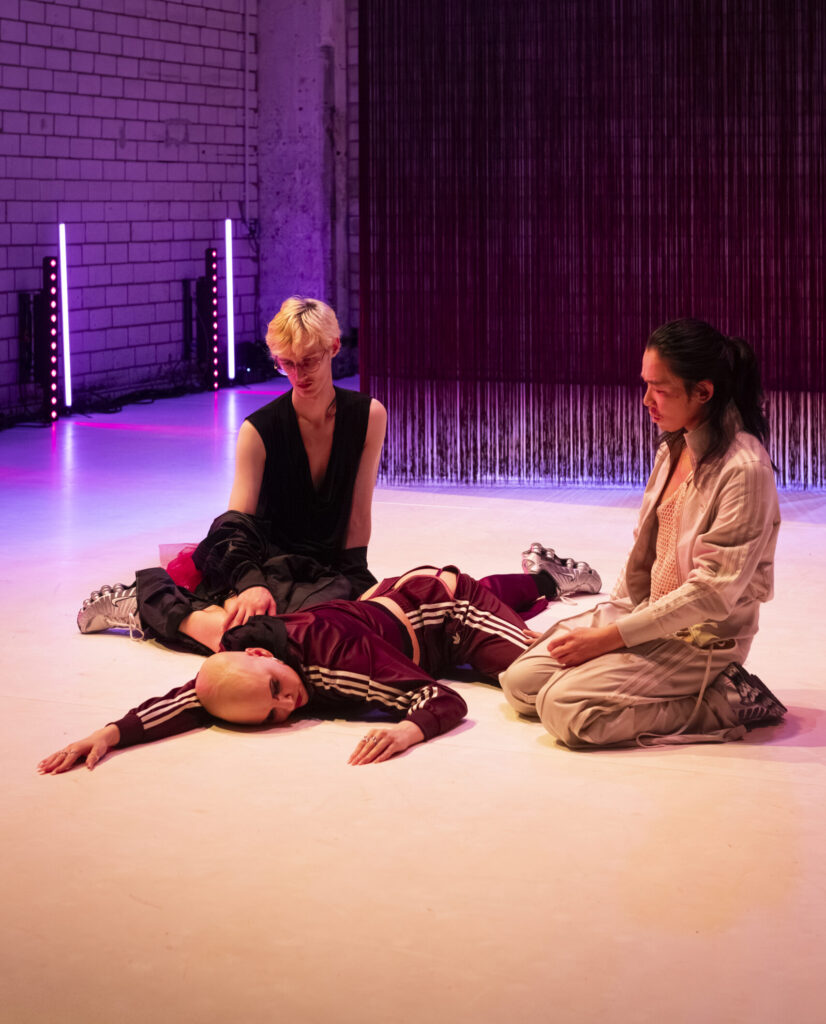
Stripping Bolero
Rykena/Jüngst
- dance
- performance
- DGS
- EN
- DE
09.10.- 20:00 - 21:10
10.10.- 18:00 - 19:10
09.10.- 20:00 - 21:10
10.10.- 18:00 - 19:10
A piece of mounting climaxes: Drawing on Maurice Ravel’s world-famous Boléro, Rykena/Jüngst embark on a playful and humorous search for the climax. Dance, sign language and erotic storytelling intertwine in a multi-layered, sensual performance that seduces and enchants in an accessible way.
Tickets
6€ - 36Venue
schwere reiter hall
Dachauer Str. 114
80636 MünchenAccessibility
-
 alternative seating
-
 audio description
-
 DGS (german sign language)
-
 Early Boarding
-
 Highly visual events / without language
-
 Open Captioning / Surtitles
-
 Tactile Tour
-
Wheelchair Access
-
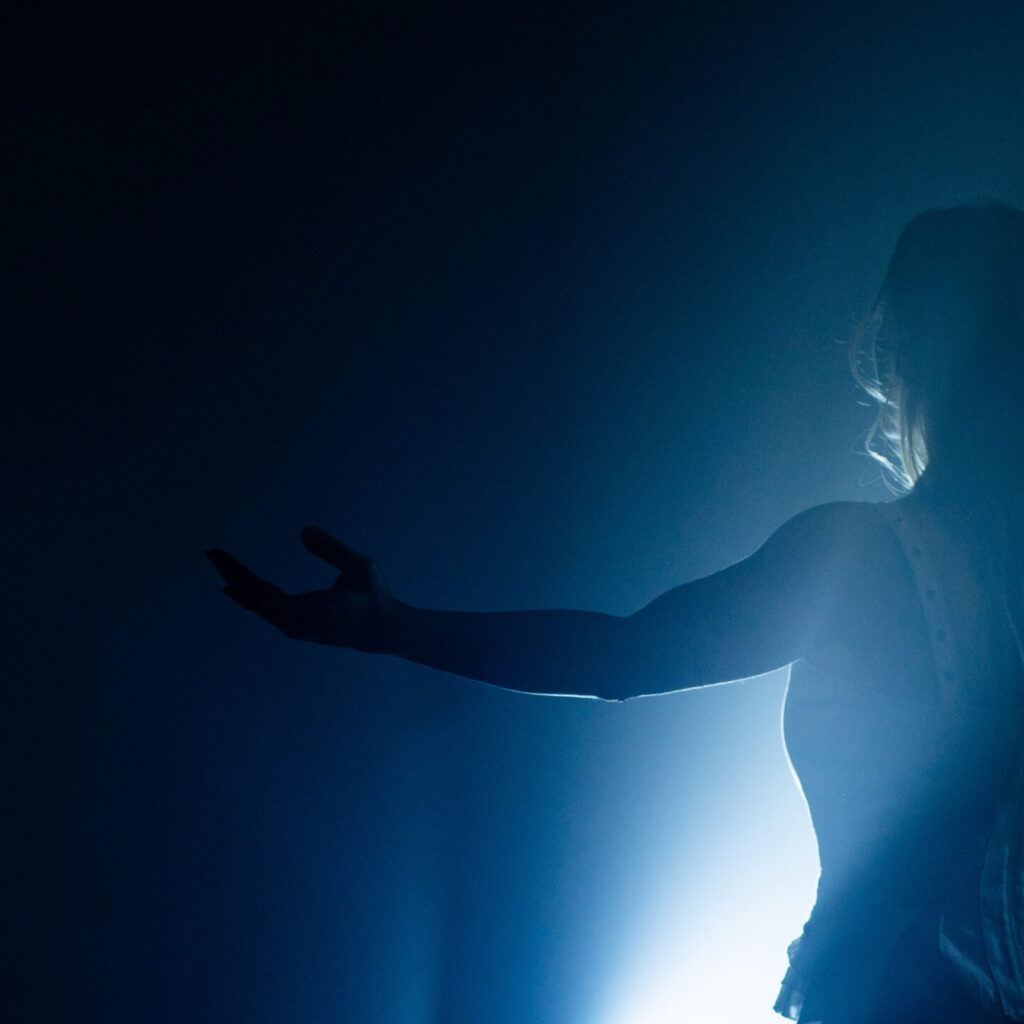
Giving back the Blessings
Alina Belyagina
- dance
- performance
- DGS
- without language
09.10.- 21:30 - 22:15
09.10.- 21:30 - 22:15
Alina Belyagina’s dance performance moves between a night at the club, vogueing, and folk ritual. It unfolds as a choreographic landscape without a center, where body, light, sound, and movement are held in constant flux. The performance opens a space between resistance and radical hope – culminating in the circle dance Khorovod/Kolo as a pulsating finale.
Tickets
6€ - 36Venue
ZIRKA
Dachauer Str.110c
80636 MünchenAccessibility
-
DGS (german sign language)
-
Highly visual events / without language
-
Wheelchair Access
-
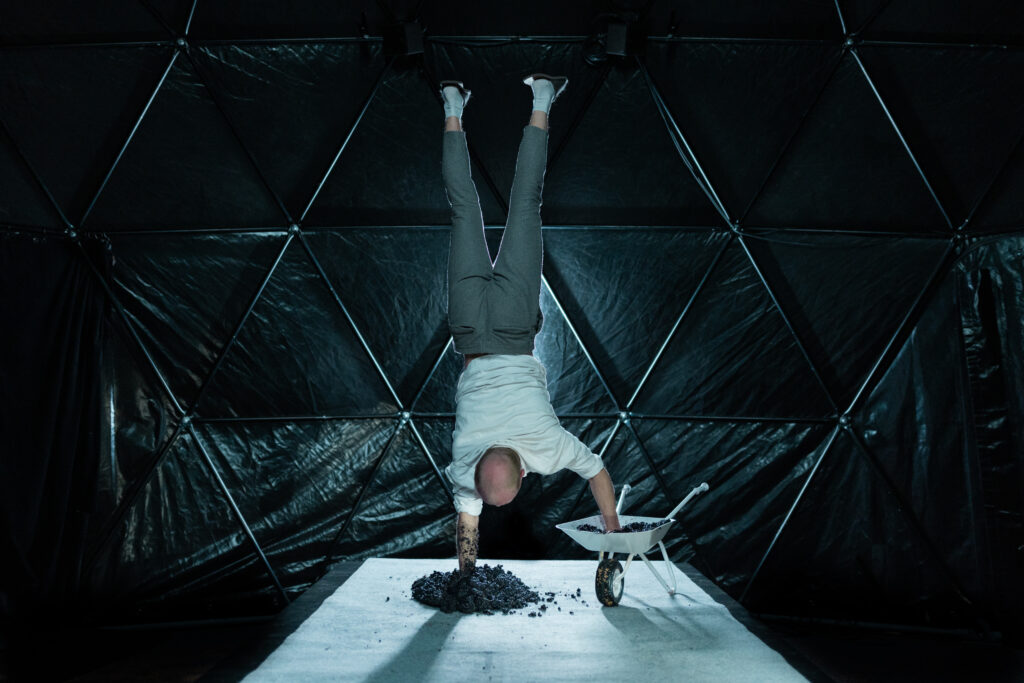
Symbiosis
Kolja Huneck and Luuk Brantjes
- contemporary circus
- performance
- without language
10.10.- 15:00 - 16:00
11.10.- 18:00 - 19:00
12.10.- 20:00 - 21:00
10.10.- 15:00 - 16:00
11.10.- 18:00 - 19:00
12.10.- 20:00 - 21:00
Two circus artists, two artistic signatures, one performance experience. Symbiosis combines contemporary circus and object theatre in a poetic and political dialogue between humans and matter, revealing how fragile our connection to the world around us truly is. The custom-built black dome tent invites audiences to immerse themselves in a surreal, dark atmosphere.
Tickets
6€ - 36Venue
Dome tent
Frei-Otto-Straße (Kreativquartier)
80797 MünchenAccessibility
-
Early Boarding
-
Highly visual events / without language
-
Wheelchair Access
-
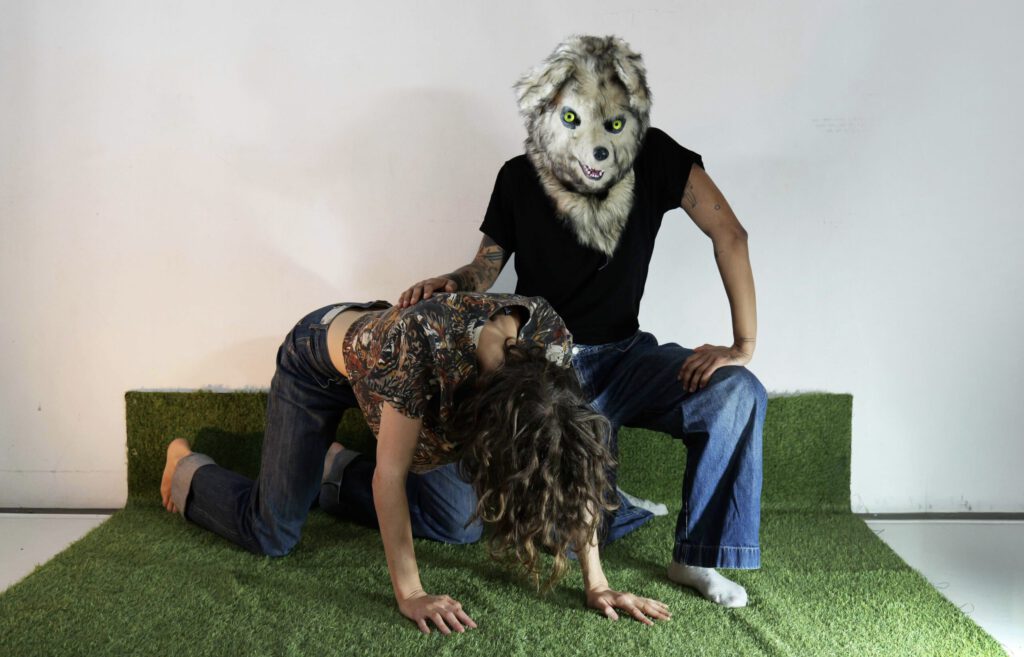
Making of an Animal (Premiere)
Quindell Orton
- dance
- performance
- EN
10.10.- 20:00 - 21:00
11.10.- 20:00 - 21:00
10.10.- 20:00 - 21:00
11.10.- 20:00 - 21:00
You pig, you snake, you dog. We need animals, fear them, care for them, consume them, hunt and worship them. Humans borrow from animals, even to deny other people their humanity. Making of an Animal explores the disturbing depths of animalization. Through movement, video, and live sound dubbing the performers’ bodies become palpable as uncanny yet compelling hybrid forms between human and animal.
Tickets
6€ - 36Venue
HochX Theater und Live Art
Entenbachstr.37
81541 MünchenAccessibility
-
Early Boarding
-
Wheelchair Access
-
-
The Metamorphosis
Manuel Gerst
- performance
- without language
13.10.- 20:00 - 21:00
13.10.- 20:00 - 21:00
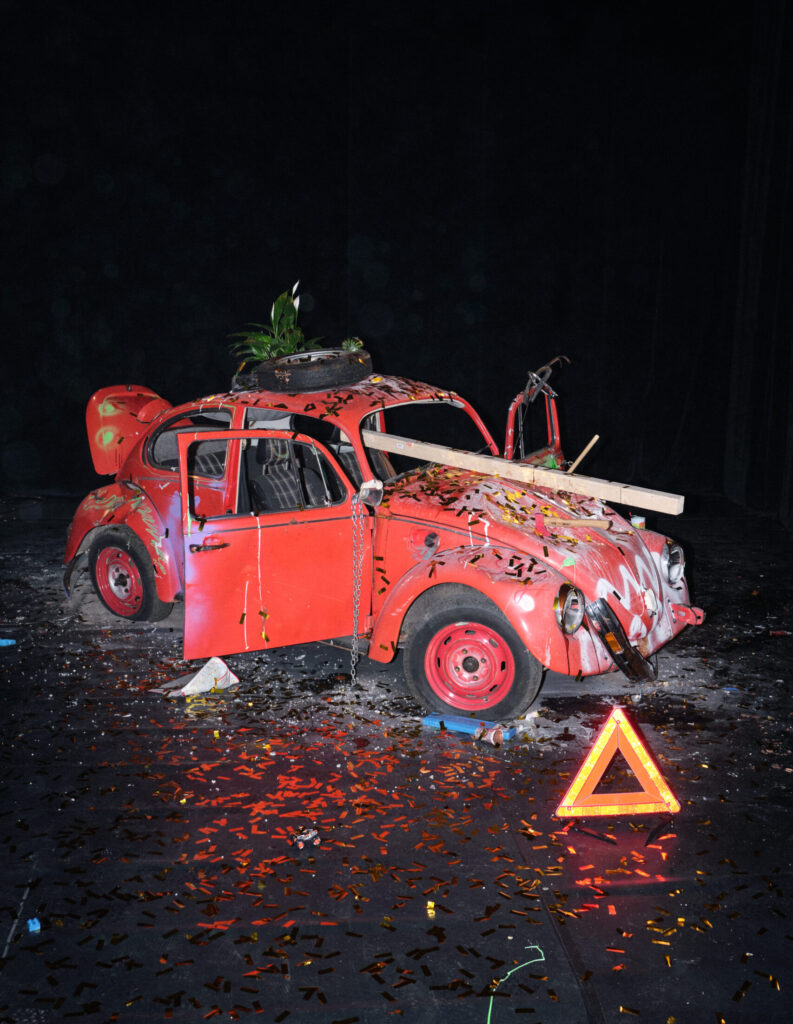
At the center of this happening is a beetle. Much like Gregor Samsa in The Metamorphosis, it becomes the target of aggression and violence. Or does it? The audience alone decides how far it is willing to go. Let he who is without sin cast the first apple.
Tickets
6€ - 36Venue
schwere reiter hall
Dachauer Str. 114
80636 MünchenAccessibility
-
Early Boarding
-
Open Captioning / Surtitles
-
Wheelchair Access
-
Wood Wood Wood – Nothing’s ever good
Christiane Huber
- theater
- EN
- DE
- PL
14.10.- 18:00 - 19:10
15.10.- 20:00 - 21:10
14.10.- 18:00 - 19:10
15.10.- 20:00 - 21:10
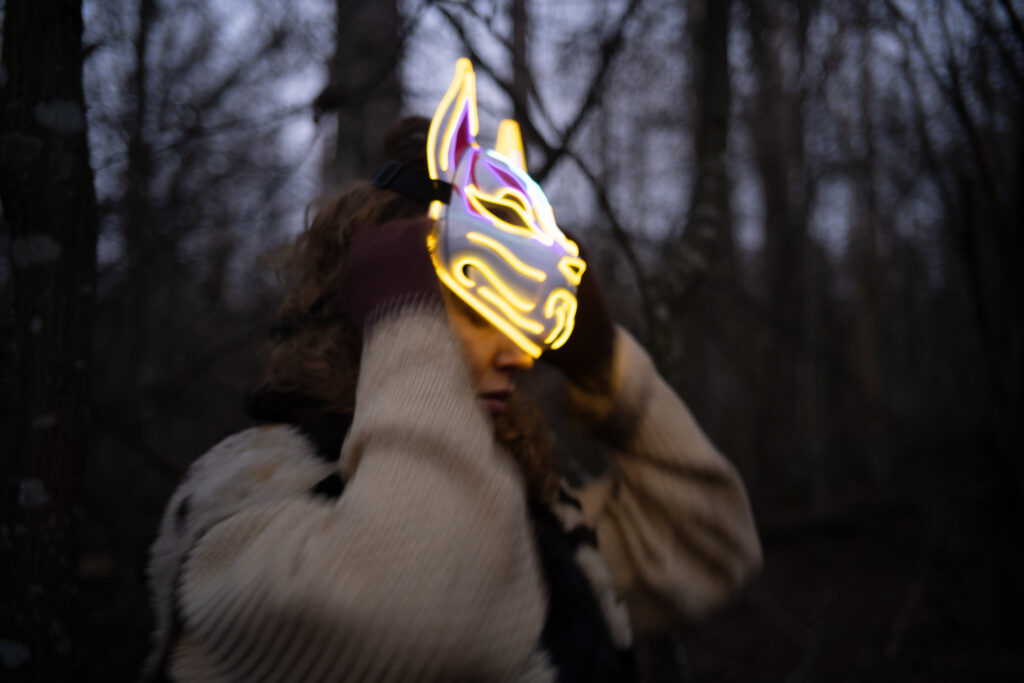
The Białowieża Forest, located between Poland and Belarus, is a primeval forest, a biotope, and, to this day, a scene of extreme violence. In the German-Polish production “Wood Wood Wood”, four performers explore the turbulent history of this region on the EU’s external border. And right in the middle of it all: a DJ at his console, busy looping the past and the present.
Tickets
6€ - 36Venue
HochX Theater und Live Art
Entenbachstr.37
81541 MünchenAccessibility
-
audio description
-
Early Boarding
-
Open Captioning / Surtitles
-
Tactile Tour
-
Wheelchair Access
-
The Soldier. A Rite of Passage
Julian Warner
- music
- performance
- EN
- FR
- DE
14.10.- 19:00 - 19:50
15.10.- 18:00 - 18:50
14.10.- 19:00 - 19:50
15.10.- 18:00 - 18:50
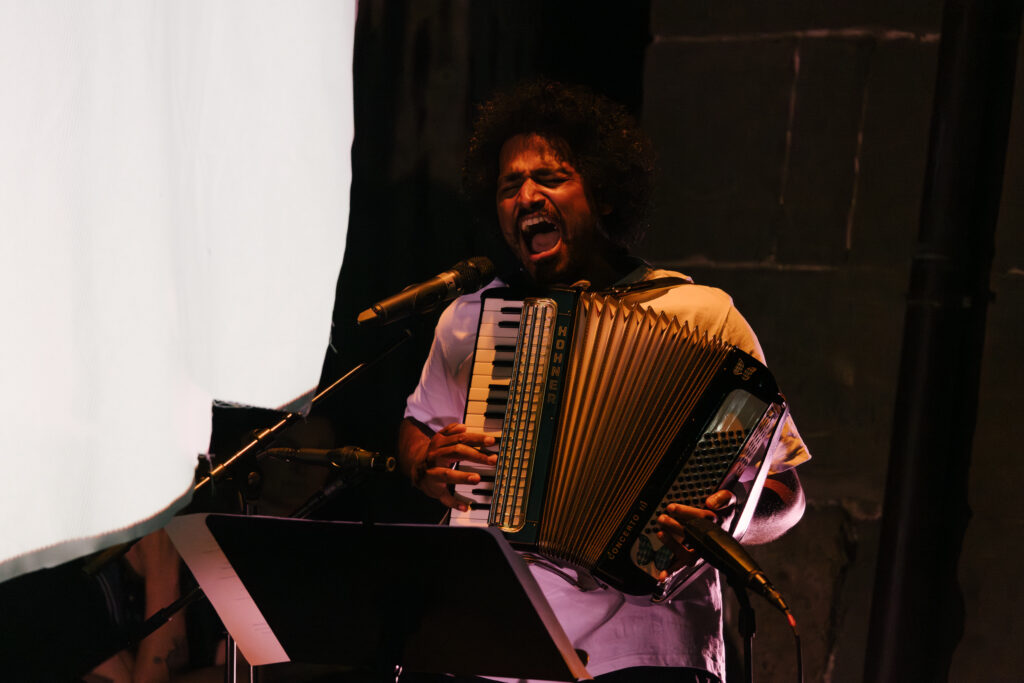
A Black artist realises that he has become a soldier. But is cultural warfare really war? Drawing on Frantz Fanon, anti-colonial thinker and icon of Black resistance, Julian Warner dissects the racism of the present day. Language, accordion, and percussion become his weapons in this profound and moving solo performance.
Tickets
6€ - 36Venue
Dome tent
Frei-Otto-Straße (Kreativquartier)
80797 MünchenAccessibility
-
Early Boarding
-
 Highly auditory event
-
Open Captioning / Surtitles
-
Wheelchair Access
-
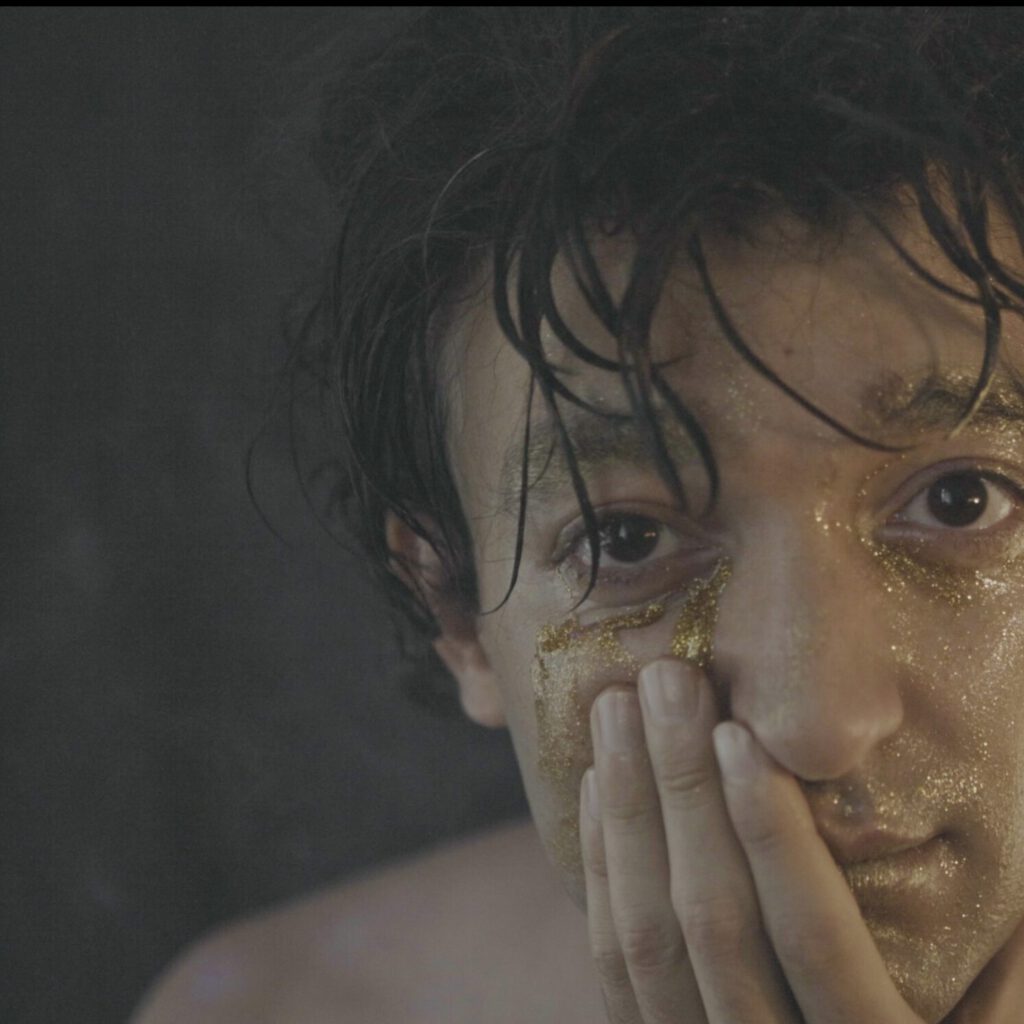
Ya Te Yan Ya Min // Bizim Olan // Raub und Besitz // Is It Really Yours
Dara Lalo, İrem Ekin & Sascha Malina Hoffmann
- theater
- EN
- DE
- KUR
- TR
14.10.- 20:30 - 21:30
16.10.- 18:00 - 19:00
14.10.- 20:30 - 21:30
16.10.- 18:00 - 19:00
Hands up — this is a robbery! Two characters set out to pull off a heist, but it soon becomes about far more than money. Raub und Besitz is a riotous blend of songs, stand-up, agitprop, and video that, across Turkish, Kurdish, English, and German, asks who really owns what: land, language, wealth, and the power to shape the narrative.
Tickets
6€ - 36Venue
PATHOS theater
Dachauer Straße 110d
80636 MünchenAccessibility
-
Early Boarding
-
Open Captioning / Surtitles
-
Wheelchair Access
-
Yoldaş – Women Holding One Another
Nihan Devecioğlu
- music
- theater
- DE
- TR
15.10.- 20:00 - 21:15
16.10.- 20:00 - 21:15
15.10.- 20:00 - 21:15
16.10.- 20:00 - 21:15
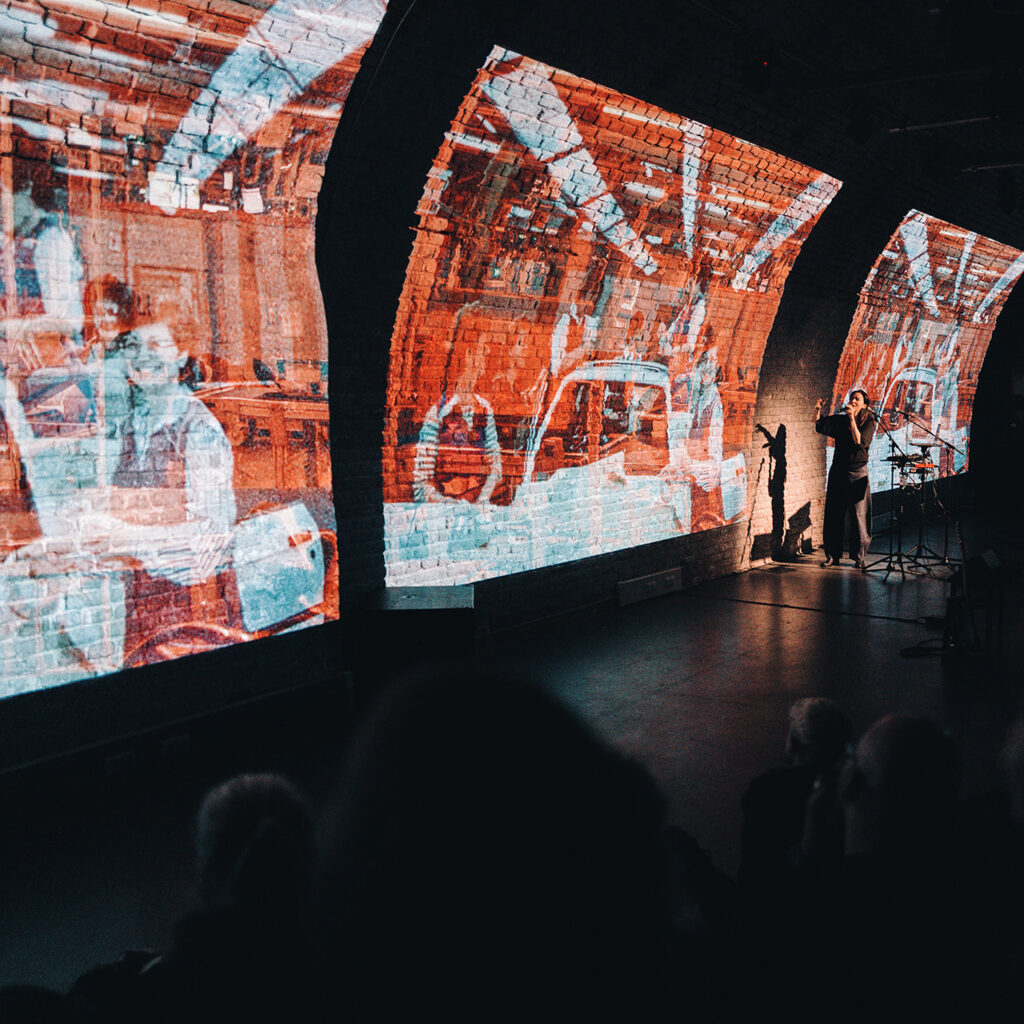
BMW: a global corporation built on the labor of workers like Emine Ulusen, Evgenia Karakolidis, and Anayurt Kırımli. Nihan Devecioğlu creates a space of remembrance: through music and video, and in both German and Turkish, Yoldaş sensitively tells stories of exclusion, hard work, and female solidarity.
Tickets
6€ - 36Venue
schwere reiter hall
Dachauer Str. 114
80636 MünchenAccessibility
-
alternative seating
-
Early Boarding
-
Highly auditory event
-
Open Captioning / Surtitles
-
Wheelchair Access